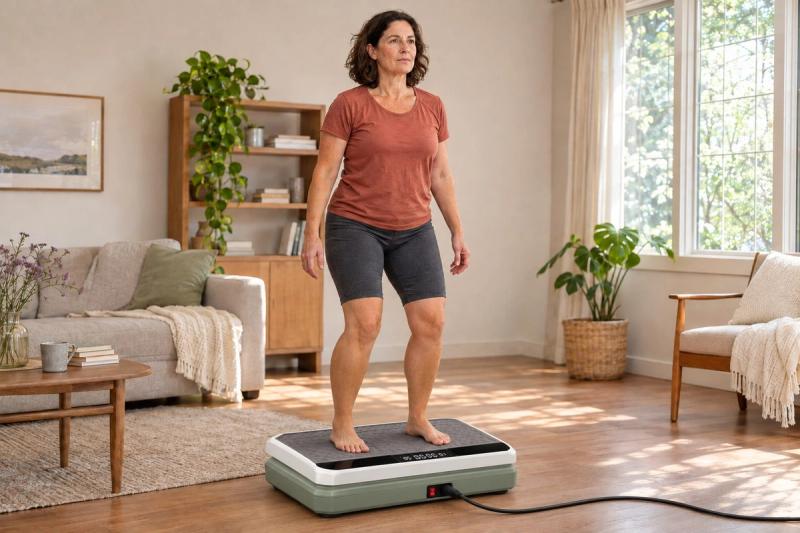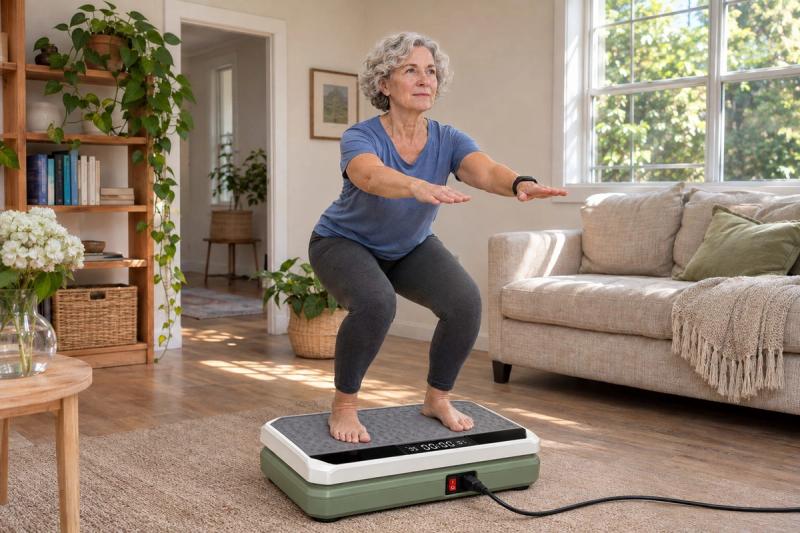
A vibration plate can't fully replace exercise. Moving on one is still a real form of exercise. In trials of older adults, plate training built strength and fitness about as well as some standard programs. Strength training still came out ahead in one large review, and walks still cover the weekly activity minutes.
Can a vibration plate replace exercise?
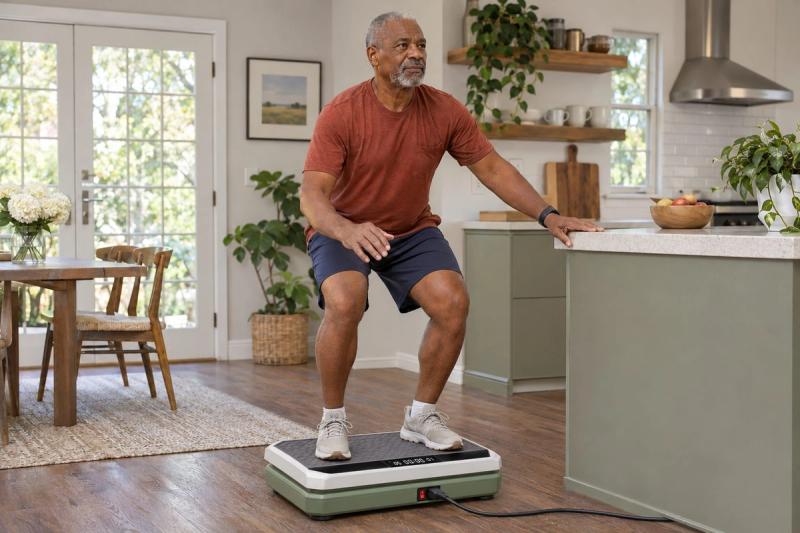
Not completely. It can stand in for part of a workout, and the clearest results are for muscle strength in older adults.
Researchers have tested this in three ways. Some reviews compared plate training with strength training, and one long trial compared it with a full fitness program. Lab studies then measured how hard your body works on a plate.
In the long trial and in the lab studies, people squatted or did other bodyweight exercises while the plate vibrated. So these studies compare exercise on a plate with exercise without a plate.
Is a vibration plate as good as strength training?
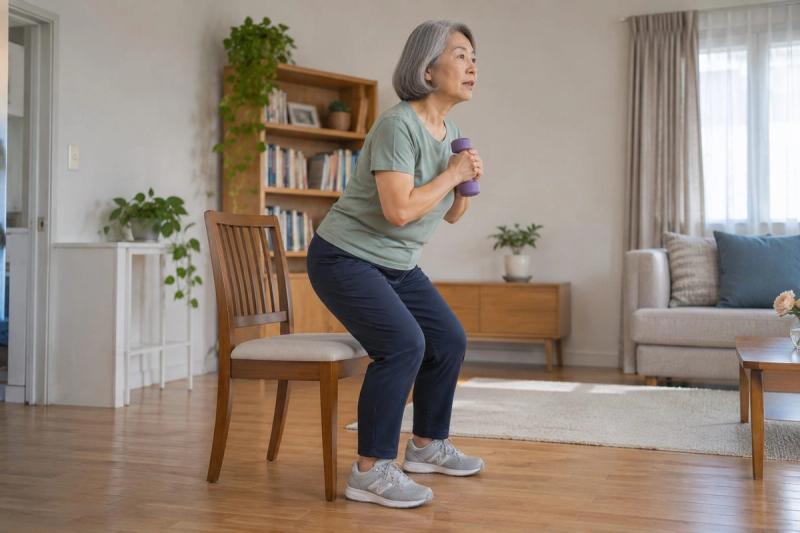
For muscle strength in older adults, it comes close in some reviews. A 2020 review combined 63 randomized trials in older adults (Šarabon et al., 2020). Of those, 48 tested strength training and 11 tested vibration plates. The other 4 tested electrical muscle stimulation.
Both kinds of training improved muscle strength by a similar amount. Strength training also improved some everyday movement tests and the size of the thigh muscles. The authors noted that the 11 vibration trials were too few to compare every outcome. Their conclusion was that strength training, alone or combined with a plate, is probably the most reliable choice.
A second review looked at 30 randomized trials (Lai et al., 2018). Together they included 1,405 people. Everyone was aged 60 or older. The review compared strength training, endurance training and vibration plate training. Strength training was the most effective choice for both strength and physical performance.
Plate training also beat doing nothing for physical performance. None of the programs, including strength training, changed lean body mass, the weight of everything in the body except fat.
So for older adults who can do strength training, that is still the most reliable way to get stronger. A plate can be one part of that plan.
Is a vibration plate as good as walking or cardio?
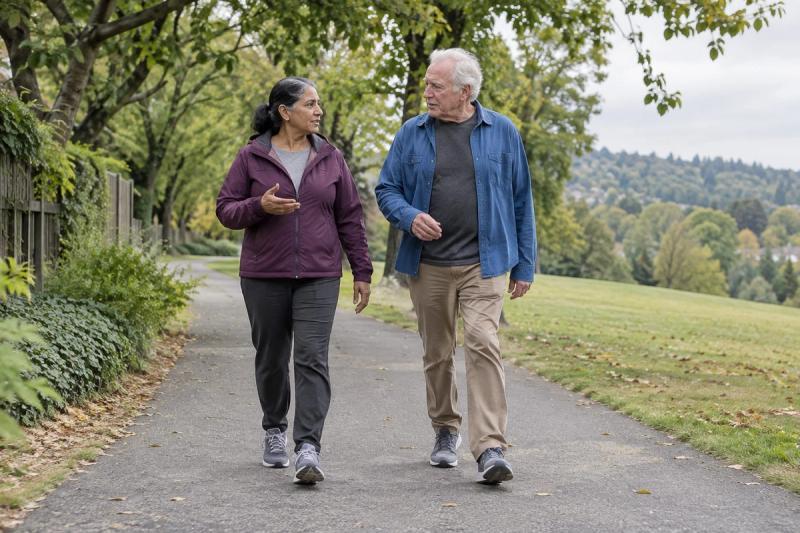
One long trial suggests plate training can build some fitness. It followed 220 adults over 60 who lived at home in the community (Bogaerts et al., 2009). Their average age was 67, and the trial lasted a full year.
The researchers split them at random into three groups. One group trained on a vibration plate. A second group did a fitness program of cardio, strength, balance and stretching. The third group did no training.
After a year, both training groups had raised their peak oxygen uptake by a similar amount. That is the most oxygen the body can use at full effort, measured on an exercise bike. Both groups also got stronger. The fitness group improved more in how long they could keep going on the bike before stopping.
That is one trial, in older adults who were exercising on the plate. Whether a few minutes of standing still on a plate compares with a daily walk is a separate question, which this trial did not test.
Does standing on a vibration plate count as exercise?
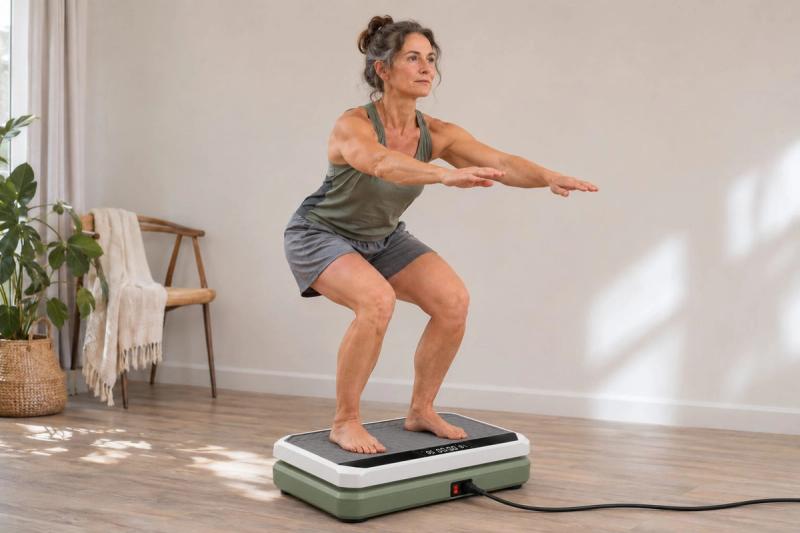
Moving on a vibration plate does count. A small lab study measured squats on a plate in two groups of healthy adults, 10 in one and 8 in the other (Qiao et al., 2025). The plate ran at 30 Hz. With up to 40% of body weight added, the squats counted as moderate to vigorous exercise.
Another lab study had 22 active young men do the same bodyweight moves with the vibration on and off (Milanese et al., 2018). With the vibration on, they used about 20% more energy. The session lasted 20 minutes, and the extra came to about 30 calories. That is a small extra, and they only got it while they were exercising.
Neither study measured standing still on a plate. So the effort comes from the moves you do, and the vibration adds a little on top. For what the research says about vibration plates, balance, strength and bone density, see does a vibration plate work.
How does a vibration plate fit into a week of exercise?
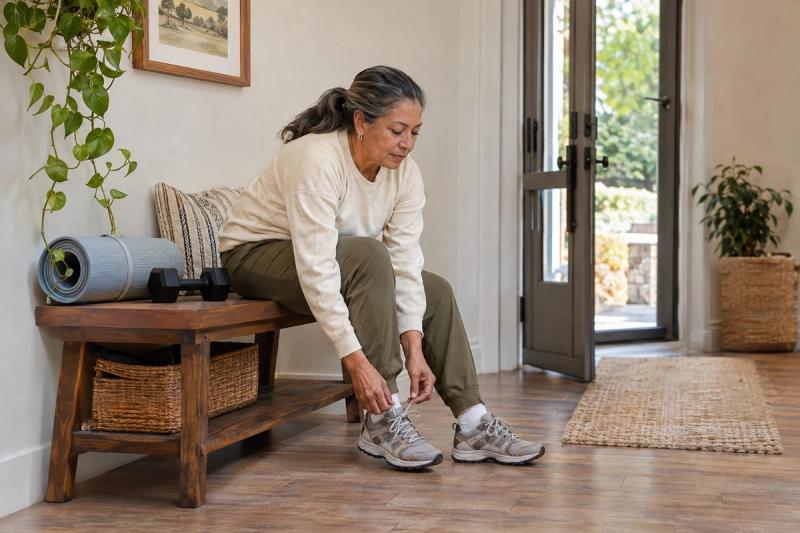
Fit plate sessions into the weekly guideline, and keep walking as the base. US guidelines call for at least 150 minutes of moderate activity a week, such as brisk walking (CDC, 2026). They also call for 2 days of muscle-strengthening activity. And the minutes don't have to come all at once.
Squats on a plate work your leg muscles, so a plate session can count toward part of the strength side. Your walks still build up the 150 minutes. On days when a full walk feels like too much, try a low impact workout at home. Or spread short bursts through the day with exercise snacks.
We'd keep your walks and add two short plate sessions a week, with slow squats.
That is also where our board comes in. Kiwii Move is an interactive whole-body vibration board — a vibration plate with four pressure sensors that turns 10 minutes a day into games you play with your body. You can read more about our interactive vibration board.
Sources
Šarabon N et al., Journal of Clinical Medicine. Resistance Exercise, Electrical Muscle Stimulation, and Whole-Body Vibration in Older Adults: Systematic Review and Meta-Analysis of Randomized Controlled Trials. 2020. pmc.ncbi.nlm.nih.gov
Lai CC et al., Age and Ageing. Effects of resistance training, endurance training and whole-body vibration on lean body mass, muscle strength and physical performance in older people: a systematic review and network meta-analysis. 2018. europepmc.org
Bogaerts AC et al., Age and Ageing. Effects of whole body vibration training on cardiorespiratory fitness and muscle strength in older individuals (a 1-year randomised controlled trial). 2009. europepmc.org
Qiao Z et al., Scientific Reports. Unveiling whole body vibration squat intensity insight from oxygen consumption and heart rate response. 2025. pmc.ncbi.nlm.nih.gov
Milanese C et al., PLoS One. Metabolic effect of bodyweight whole-body vibration in a 20-min exercise session: A crossover study using verified vibration stimulus. 2018. pmc.ncbi.nlm.nih.gov
US Centers for Disease Control and Prevention. Adult Activity: An Overview. 2026. cdc.gov