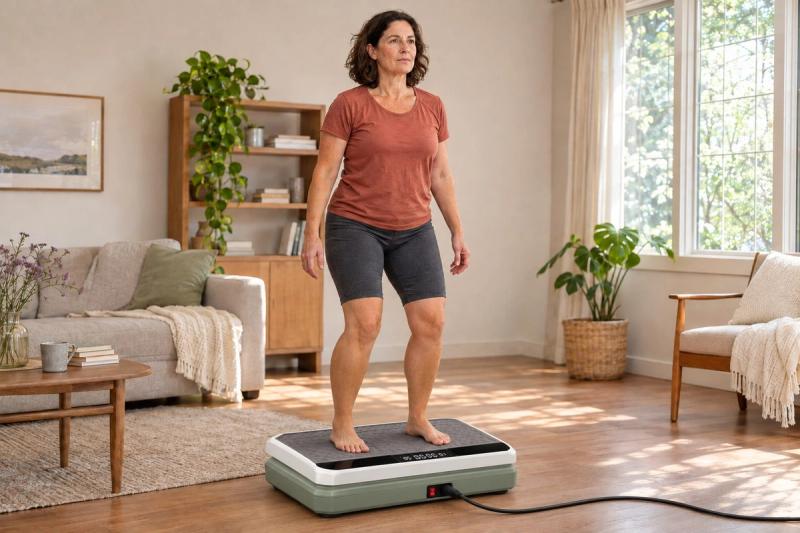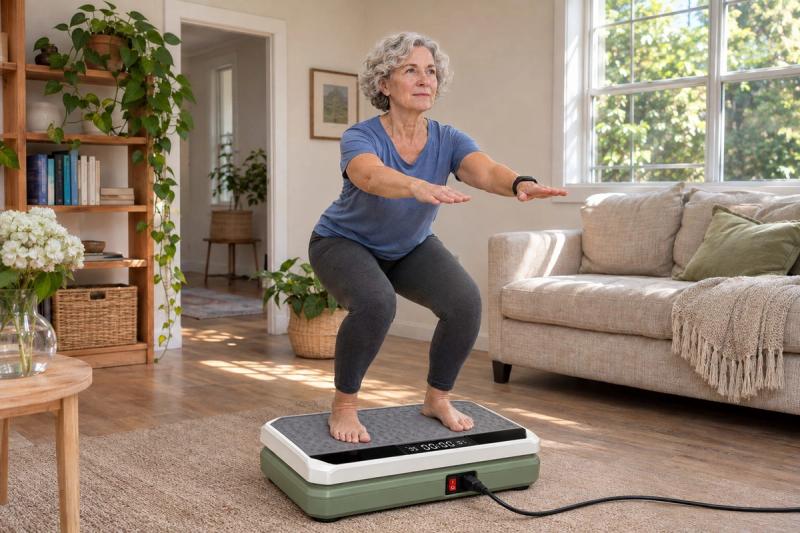
Research on using a vibration plate for neuropathy is small, and most of it is low quality. A few trials found better scores for pain, for feeling vibration in the feet, and for standing balance. No study shows a vibration plate changing the nerve damage itself. Ordinary balance and strength exercise did as well or better where trials compared them.
Is a vibration plate good for neuropathy?
The research can't answer that with confidence yet. Most studies are small, short, and in people with diabetes. A few pain, sensation and balance scores improved, and the evidence behind them is weak.
Peripheral neuropathy is damage to the nerves that carry feeling and signals to the feet, legs and hands. Diabetes is one cause, and most of the trials studied people with diabetes. A smaller set of trials studied neuropathy after cancer treatment.
In all of these studies, people stood or exercised on a vibration plate for a few weeks or months. The researchers then checked pain, how well people could feel vibration, and how well they could balance.
What does research show for diabetic neuropathy?
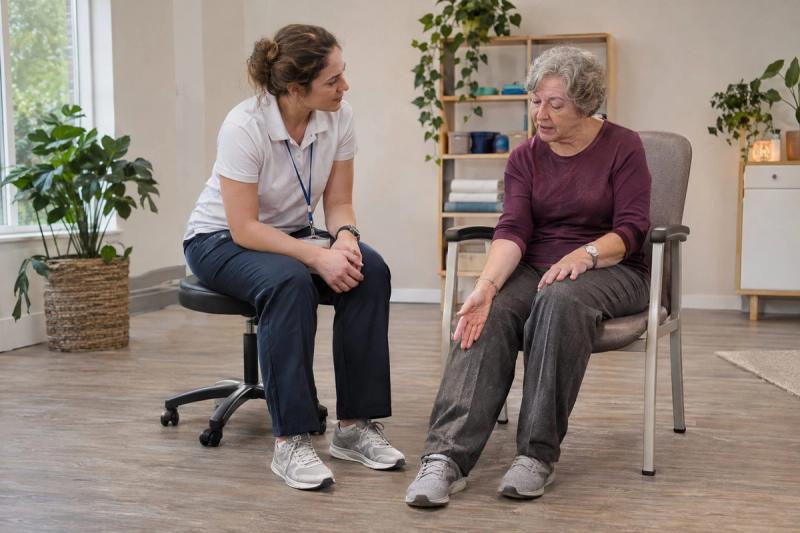
A 2018 review summed up the early studies (Robinson et al., 2018). It found only 3 studies that met its standards. Together they included 83 people with diabetic neuropathy.
In people with diabetic neuropathy, those studies suggested slight improvements in nerve pain, balance and blood sugar control. The authors rated the evidence as very low quality. Most of the studies were set up in ways that could tilt their results. None of the studies measured how well people could feel touch on the soles of their feet.
Two small randomized trials, from 2017 and 2020, add more detail. In one, 59 people with type 2 diabetes and neuropathy trained for 6 weeks (Lee et al., 2017). About half trained on a vibration plate. The rest held the same positions without vibration.
The vibration group got better at feeling vibration in their feet. Neither group changed in how they sensed warm or cold pain.
The other trial included 26 people with painful diabetic neuropathy, with an average age of about 60 (Jamal et al., 2020). One group added 6 weeks of vibration training, 3 days a week, to their usual medical care. The other group had usual care only.
The vibration group improved more on pain scores, vibration sense, balance tests and quality of life. That control group did no exercise at all, so some of the difference may come from simply being active.
Does a vibration plate help balance with neuropathy?
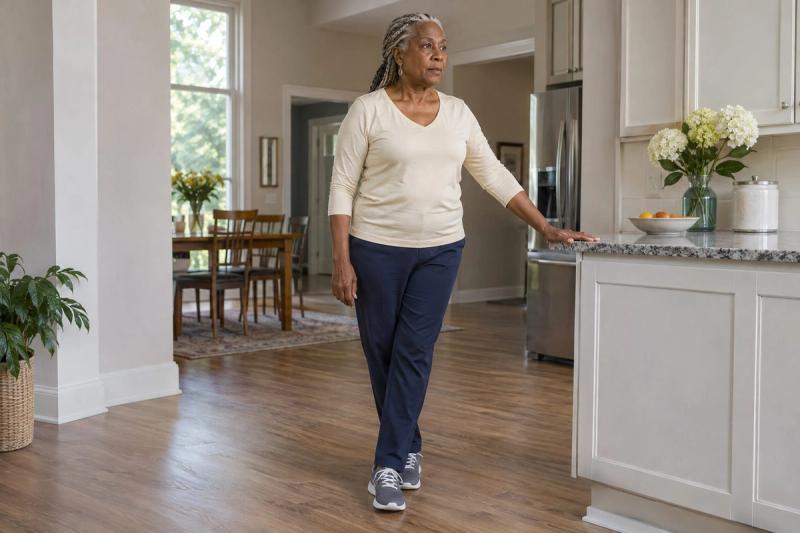
In older adults with diabetic neuropathy, it helped one balance test. A 2025 review combined 21 randomized trials in older adults with diabetic neuropathy (Wang et al., 2025). It compared five types of exercise with no exercise.
Vibration training helped people stand longer on one leg. It did not change how fast they walked. It also did not change the timed up-and-go test, where you stand up from a chair, walk a short distance and sit back down.
Balance exercise and programs that mix several kinds of exercise did better. They improved more of the tests that doctors use to judge the risk of a fall. These were test scores, so the review did not count actual falls.
For a set of balance moves to start with, see these balance exercises for seniors.
What about neuropathy after chemotherapy?
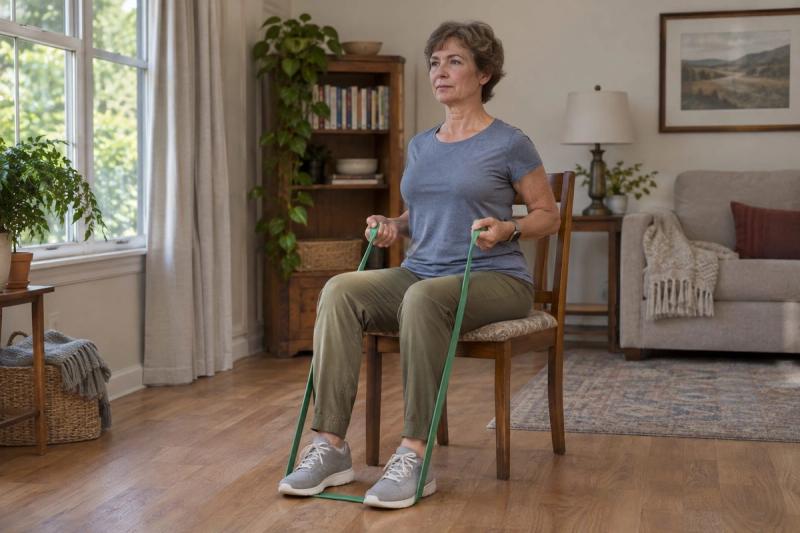
Some cancer drugs can damage nerves too, and a few trials have tested vibration in that setting. The results so far show no clear edge for vibration over ordinary training.
One trial included 66 women with breast cancer during chemotherapy with paclitaxel (Dalferth et al., 2025). For 12 weeks, one group did strength training, a second did strength training with vibration, and a third got standard advice. Adding vibration gave no extra benefit over strength training alone. Both training groups kept their sense of vibration in the feet a little steadier than the advice-only group. The researchers could not rule out chance for that difference. Balance stayed about the same in all three groups. No side effects were recorded.
Another trial included 44 breast cancer survivors whose neuropathy had lasted after treatment (Mijwel et al., 2026). For 12 weeks, one group did vibration-based strength training. The other group did standard cardio and strength training. Symptoms improved about the same amount in both groups. The standard training group improved more in daily function, strength and getting around. Quality of life improved about equally in both groups.
What has research not shown yet?

Several big questions are still open. No trial we read showed a vibration plate changing the damaged nerves themselves. The 2018 review found no study that measured touch on the soles of the feet. The 2025 balance review used test scores, so it could not say whether people fell less often.
The four single trials were also short, from 6 to 12 weeks. So these trials can't show whether any gain lasts once people stop, or what happens over years.
Is a vibration plate safe if you have neuropathy?
Talk to your doctor or physiotherapist before you try one. This matters most if you have reduced feeling in your feet, or a foot ulcer or open wound. It also matters if you have an implant, such as a pacemaker or a joint replacement.
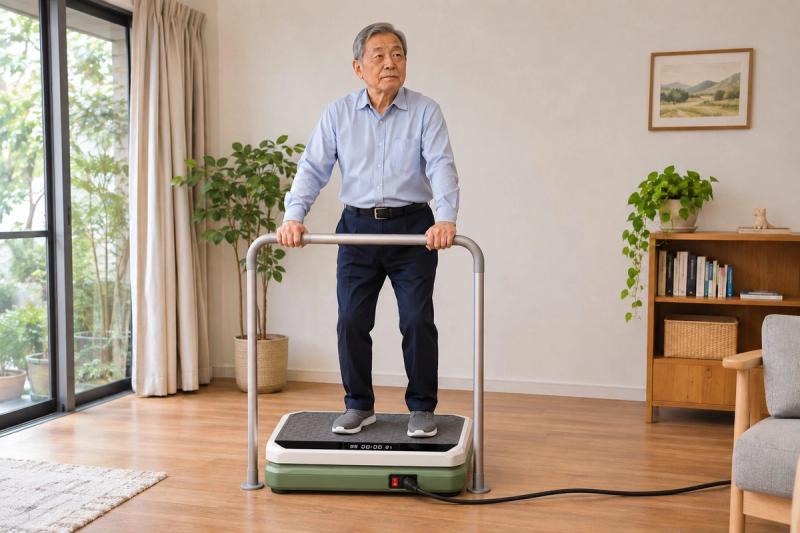
If you get the go-ahead, start on the lowest setting and hold a rail or a sturdy chair. Check your feet for redness or broken skin after every session. For more on who should check with a doctor before using a plate, see whether vibration plates are safe.
Short, regular sessions are also the idea behind our board. Kiwii Move is an interactive whole-body vibration board — a vibration plate with four pressure sensors that turns 10 minutes a day into games you play with your body. You can read more about our interactive vibration board.
Sources
Robinson CC et al., Journal of Musculoskeletal & Neuronal Interactions. Effects of whole body vibration in individuals with diabetic peripheral neuropathy: a systematic review. 2018. pmc.ncbi.nlm.nih.gov
Lee K et al., Journal of Physical Therapy Science. Effects of whole-body vibration therapy on perception thresholds of type 2 diabetic patients with peripheral neuropathy: a randomized controlled trial. 2017. pmc.ncbi.nlm.nih.gov
Jamal A et al., Journal of Diabetes and Metabolic Disorders. Whole body vibration showed beneficial effect on pain, balance measures and quality of life in painful diabetic peripheral neuropathy: a randomized controlled trial. 2020. europepmc.org
Wang D et al., Journal of Exercise Science and Fitness. Effectiveness of various exercise types in reducing fall risk among older adults with diabetic peripheral neuropathy: A systematic review and meta-analysis. 2025. pmc.ncbi.nlm.nih.gov
Dalferth R et al., Supportive Care in Cancer. Effects on chemotherapy-induced peripheral neuropathy by moderate strength training in combination with whole-body vibration in breast cancer patients. 2025. pmc.ncbi.nlm.nih.gov
Mijwel S et al., European Journal of Oncology Nursing. Whole body vibration as an alternative to conventional aerobic and resistance training for managing chemotherapy-induced peripheral neuropathy in breast cancer survivors: The sensi-ex randomized trial. 2026. europepmc.org